
Children Are Going Without Food and Medicine. Here's What Happened After America Pulled Back on Foreign Aid.

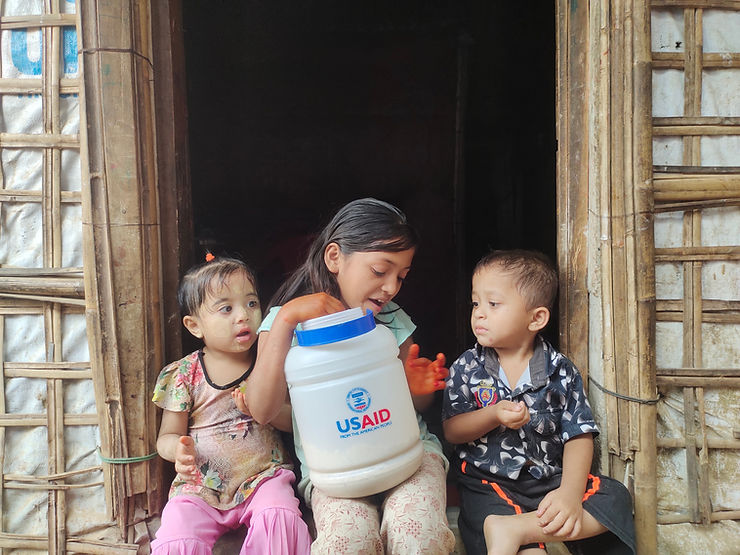
When a child goes hungry tonight in a refugee camp, or a mother cannot get medicine for her sick baby, the cause may seem distant and complicated. But sometimes it traces back to a single decision made thousands of miles away — a decision to stop sending help.
That is the reality unfolding right now across some of the world's most vulnerable communities. A year after the United States dramatically scaled back its foreign aid programs, the people who depend on that help are still living with the consequences.
A Global Safety Net Under Severe Strain
Alistair Dutton, the head of Caritas Internationalis — the Catholic Church's worldwide network of relief and development agencies — traveled to the United Nations in September to deliver an urgent message to world leaders: the funding must be restored.
Dutton described a frustrating pattern he keeps encountering. Government officials, he said, keep asking aid organizations to "do more with less" — while handing them the same long list of responsibilities they had before the cuts. His response is straightforward. According to America Magazine, he told those officials plainly: they are doing less with less.
The numbers behind that statement are staggering. According to the Global Humanitarian Assistance Report 2026, global humanitarian funding has fallen by nearly one-third since 2023. Cuts from the United States and Germany alone account for 90 percent of that decline. The United Nations reported the largest funding gap on record for its emergency appeals, which means that in 2025, millions of people living through wars, famines, and disasters simply received no assistance at all.
How Much Did the U.S. Pull Back?
The scale of America's retreat from global aid is hard to overstate. According to Pew Research Center, the United States spent roughly $26 billion less on foreign aid in 2025 than it did the year before. So far in 2026, total foreign aid spending sits at about $7 billion — a pace that would make this one of the lowest levels of American humanitarian giving in decades.
For many Americans, foreign aid can feel abstract or even wasteful. But data from Pew Research consistently shows that foreign aid has never represented more than a small fraction of the overall federal budget. That relatively small amount funded clean water projects, childhood vaccination programs, emergency food supplies, and maternal health care for some of the poorest families on earth.
Faith Communities Are Stepping Up — But Cannot Do It Alone
Churches and faith-based relief organizations have not walked away. Many are working harder than ever to fill the gaps. But Dutton describes this moment as a double-edged sword. The secular partners who once worked alongside faith organizations — managing water infrastructure, running vaccine distribution, operating food supply networks — have not received the same funding and in many cases are simply gone. What remains is an enormous burden placed on organizations that were never designed to carry it alone.
Dutton is careful to say that long-term dependence on outside aid is not the goal. He believes deeply in building up communities so they can care for themselves.
"We want the empowerment of peoples and for states to be able to provide for themselves. Nobody really gains any dignity if they're just reliant on others."
But there is a critical difference, he argues, between working thoughtfully toward self-sufficiency and abruptly cutting off the most vulnerable people in the world with no transition plan. The rapid dismantling of programs through the Department of Government Efficiency, led by Elon Musk, did exactly that. As Dutton put it, "Nobody deserves to be martyred in that way."
What is at stake is not a budget line. It is the lives of children who cannot advocate for themselves, families who had no part in any political decision, and communities that were depending on programs that vanished overnight. The question of what America owes the world's most vulnerable people is one that goes to the heart of who we are — and what we choose to do with the resources we have.

