
Trump Administration Cuts $11 Million Contract with Miami Catholic Charities, Ending 60-Year Ministry for Migrant Children

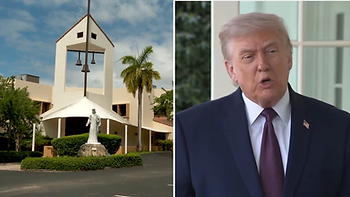
For more than six decades, Catholic Charities of the Archdiocese of Miami has provided shelter, care, and family reunification services to some of the most vulnerable children in the world. That work is now coming to an end after the Trump administration canceled an $11 million federal contract that supported the program.
The cancellation, which was delivered to the Archdiocese in late March, affects a full-service child welfare program that includes an 81-bed shelter, foster home placements, and family reunification services for unaccompanied migrant children. The program is expected to close within three months. It is operated under a contract with the Office of Refugee Resettlement, a division of the Department of Health and Human Services.
A Partnership Rooted in History
The relationship between the federal government and Catholic Charities in Miami dates back to December 1960, when a young Irish priest named Father Bryan Walsh met the first planeload of unaccompanied Cuban children at Miami International Airport. Those children had been sent alone across the Florida Straits by parents trying to protect them from Fidel Castro's revolution. Over the next two years, the program sheltered more than 14,000 children in what became known as Operation Pedro Pan — the largest recorded exodus of unaccompanied minors in the Western Hemisphere.
The shelter currently operating in Miami is named the Msgr. Bryan O. Walsh Center, in honor of that same priest. For decades, it has provided traumatized children with housing, meals, caseworkers, and a pathway toward family placement. Federal officials have previously recognized the program as a national model for similar agencies across the country.
Archbishop Thomas Wenski of Miami addressed the cancellation directly in a statement to the Miami Herald editorial board. "The U.S. government has abruptly decided to end more than 60 years of relationship with Catholic Charities in the Archdiocese of Miami. The Archdiocese of Miami's services for unaccompanied minors have been recognized for their excellence and have served as a model for other agencies throughout the country."
Community Reacts with Concern
The news has drawn strong reactions from members of the South Florida faith community. CBS News Miami reported that parish members are "beyond shocked" by the decision. Father Federico Capdepom, who retired in 2016 after 33 years serving in the Archdiocese, spoke plainly about what the cancellation means to him.
"The children that we've helped for so many, many years — to abruptly cancel $11 million, I believe, of help for migrants, I think it's totally unacceptable."
One parishioner called the decision simply "disgraceful."
Beyond the emotional response, there are immediate practical concerns. Children are currently in the care of Catholic Charities in Miami, and it is not yet clear where they will go when the program closes. An associate director at the University of Miami Law School's Children and Youth Law Clinic warned that moving these children could cause serious harm.
"For little kids, moving repeatedly creates bonding issues and destroys the sense of both self and community. They don't know who they are and where they will be from day to day."
She described relocation as "incredibly psychologically harmful" for the children involved.
The Government's Reasoning
Federal officials have pointed to a significant drop in the number of unaccompanied minors in government custody as justification for the contract cuts. According to the Department of Health and Human Services, that number has fallen from a peak of approximately 22,000 during the Biden administration to roughly 1,900 today.
Archbishop Wenski acknowledged those numbers but argued they do not justify dismantling a program built over generations. He called it "baffling" that the government would shut down a program "that it would be hard-pressed to replicate at the level of competence" demonstrated by the Church.
Broader Tensions Between the Administration and the Catholic Church
The contract cancellation comes at a time of growing friction between the Trump administration and Catholic Church leadership. President Trump has been publicly critical of Pope Leo XIV, the Chicago-born pontiff who has spoken out against the administration's immigration policies and its involvement in a U.S.-led conflict with Iran.
Pope Leo has repeatedly called for peace from the Vatican, stating in an April homily, "Stop! It is time for peace!" He has also posted on social media that "God does not bless any conflict." The pope has publicly questioned whether the administration's immigration enforcement is truly "pro-life."
President Trump responded last Sunday with a lengthy post on Truth Social calling Leo "WEAK on Crime, and terrible for Foreign Policy," and accusing the pope of "catering to the Radical Left." Trump also urged the pope to "get his act together." Separately, the president posted an AI-generated image of himself in a Christ-like pose, which drew widespread condemnation from Catholic leaders.
Archbishop Paul Coakley, president of the U.S. Conference of Catholic Bishops, said he was "disheartened" by the president's remarks. Bishop Robert Barron, who serves on Trump's own Religious Liberty Commission, called the post "entirely inappropriate and disrespectful" and said the president "owes the Pope an apology."
Pope Leo, speaking from the papal airplane while traveling to Africa, addressed the tension directly. "I have no fear of the Trump administration," he said. "I will continue to speak out loudly."
The pope also said Monday aboard the papal plane: "Too many people are suffering in the world today. Too many innocent people are being killed."

